We have compiled a list of manufacturers, distributors, product information, reference prices, and rankings for Tolerance explanation video.
ipros is IPROS GMS IPROS One of the largest technical database sites in Japan that collects information on.

Tolerance explanation video - List of Manufacturers, Suppliers, Companies and Products

Tolerance explanation video Product List

1~9 item / All 9 items

Displayed results

What is roundness for robots? An explanation of the basics!

A must-see for robot designers! An explanation of the basics of roundness.

In the robotics industry, the precision of joints affects the overall performance of the robot. Particularly in robots that require high precision movements, the roundness of joint components is crucial. Components with low roundness can lead to instability in operation and increased friction, potentially shortening the robot's lifespan. This video explains the basics of "roundness," a type of geometric tolerance. It covers the definition of roundness, examples of its use, how it is represented in drawings, and points to consider when using it. Deepen your understanding of roundness through this video and apply it to robot design. 【Application Scenes】 - Design of robotic joint components - Manufacturing of precision instruments - Quality control 【Effects of Introduction】 - Acquisition of knowledge about roundness - Reduction of design errors - Improvement of component quality

Added to bookmarks

Bookmarks list

Bookmark has been removed

Bookmarks list

You can't add any more bookmarks

By registering as a member, you can increase the number of bookmarks you can save and organize them with labels.

Free membership registration

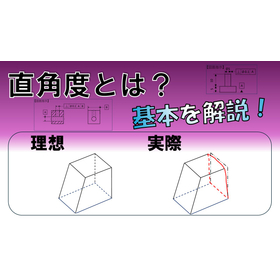
Basic Explanation of Geometric Tolerances for Machine Manufacturing: Right Angle

A clear explanation of the basics of right angles in a video!

In the machinery manufacturing industry, product quality and cost management are important issues. In particular, the precision of parts greatly affects product performance and durability, potentially leading to an increase in defective products and rework. Understanding geometric tolerances, especially perpendicularity, enhances the accuracy of drawing interpretation, reduces waste in the manufacturing process, and contributes to cost reduction. This video explains the definition of perpendicularity, examples of its use, how it is applied in drawings, and points to be aware of, supporting problem-solving in design and manufacturing. 【Usage Scenarios】 - Design and manufacturing of machine parts - Education in quality control departments - Companies aiming for cost reduction 【Effects of Implementation】 - Improved drawing interpretation skills - Increased efficiency in manufacturing processes - Reduction of defective products - Cost reduction

Added to bookmarks

Bookmarks list

Bookmark has been removed

Bookmarks list

You can't add any more bookmarks

By registering as a member, you can increase the number of bookmarks you can save and organize them with labels.

Free membership registration

Explaining the basics of parallelism for machine tools!

Explanation of the geometric tolerance "parallelism" for improving machining accuracy!

In the machine tool industry, the machining accuracy that affects product quality is extremely important. In particular, if the parallelism of parts is not properly maintained, it can lead to assembly defects and performance degradation. This video explains the basics of "parallelism," which is a type of geometric tolerance. 【Application Scenarios】 * Design and manufacturing of machine tools * Engineers aiming to improve machining accuracy * Skill enhancement in reading drawings 【Benefits of Introduction】 * Understanding the definition and importance of parallelism * Learning how to interpret parallelism on drawings * Contributing to the improvement of machining accuracy

Added to bookmarks

Bookmarks list

Bookmark has been removed

Bookmarks list

You can't add any more bookmarks

By registering as a member, you can increase the number of bookmarks you can save and organize them with labels.

Free membership registration

Explaining the Basics of Parallelism for 3D Printers!

To improve the printing accuracy of 3D printers!

In the 3D printing industry, the accuracy of the printed objects greatly affects the quality of the products. Particularly in additive manufacturing, precise alignment of each layer is crucial, and understanding parallelism is essential. If parallelism is not properly managed, distortions and dimensional errors in the printed objects can occur, potentially negatively impacting the functionality and appearance of the products. This video explains the basics of "parallelism," a type of geometric tolerance. It covers the definition of parallelism, examples of its use, how it is represented in drawings, and points to consider when using it. Please use this video as a reference to improve the printing accuracy of your 3D printer. [Usage Scenarios] - When creating prototypes with a 3D printer - When manufacturing precise parts with a 3D printer - When conducting quality control of printed objects [Benefits of Implementation] - Improved accuracy of printed objects - Reduction of defective products - Realization of printed objects as per design specifications

Added to bookmarks

Bookmarks list

Bookmark has been removed

Bookmarks list

You can't add any more bookmarks

By registering as a member, you can increase the number of bookmarks you can save and organize them with labels.

Free membership registration

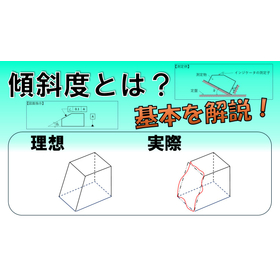
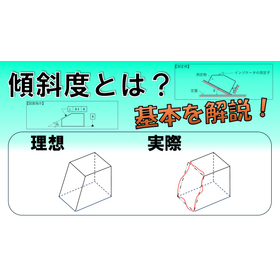
[For Machine Manufacturing] Geometric Tolerances: Basic Explanation of Inclination

A clear explanation of the basics of slope in a video!

In the mechanical manufacturing industry, a precise understanding of geometric tolerances on drawings is essential to ensure product quality and accuracy. In particular, the slope significantly affects the assembly and functionality of parts, making it important to understand its definition, usage, and points of caution. An inaccurate understanding can lead to incorrect manufacturing of parts or assembly failures. This video explains the basics of "slope," a type of geometric tolerance. 【Application Scenarios】 - Design and manufacturing of mechanical components - Reading drawings in quality control - Technical education on the manufacturing floor 【Benefits of Introduction】 - Improved drawing comprehension - Reduction of manufacturing errors - Increased customer satisfaction through enhanced quality

Added to bookmarks

Bookmarks list

Bookmark has been removed

Bookmarks list

You can't add any more bookmarks

By registering as a member, you can increase the number of bookmarks you can save and organize them with labels.

Free membership registration

Basic Explanation of Geometric Tolerances for Precision Measurement: Inclination

Contributing to the efficiency of inspection operations!

In the field of precision measurement, it is important to confirm whether the product has the shape specified in the drawings to ensure quality. In particular, the slope significantly affects the product's functionality and assembly, requiring accurate understanding and measurement. Understanding the definition and measurement methods of slope is essential for improving inspection accuracy. This video explains the basics of "slope," a type of geometric tolerance, and supports the efficiency of inspection operations. 【Usage Scenarios】 - Product quality management - Streamlining inspection processes - Enhancing drawing interpretation skills 【Benefits of Implementation】 - Deepens understanding of slope and improves inspection accuracy - Enhances drawing interpretation skills, contributing to reduced inspection time - Promotes standardization of inspection operations

Added to bookmarks

Bookmarks list

Bookmark has been removed

Bookmarks list

You can't add any more bookmarks

By registering as a member, you can increase the number of bookmarks you can save and organize them with labels.

Free membership registration

Explaining the basics of parallelism for optical devices!

Contributing to the improvement of optical equipment performance!

In the optical equipment industry, precise alignment of lenses and housings significantly affects product performance. Particularly in high-precision optical systems, even slight misalignments of components can lead to image distortion or reduced resolution. Understanding parallelism is essential for solving these issues and improving product quality. This video explains the basics of "parallelism," a type of geometric tolerance, and supports problem-solving in the design and manufacturing of optical equipment. 【Application Scenarios】 - Arrangement of lenses and mirrors - Assembly of housing components - Adjustment of precision measuring instruments 【Benefits of Implementation】 - Improved performance of optical systems - Stabilization of product quality - Increased efficiency in design and manufacturing processes

Added to bookmarks

Bookmarks list

Bookmark has been removed

Bookmarks list

You can't add any more bookmarks

By registering as a member, you can increase the number of bookmarks you can save and organize them with labels.

Free membership registration

Explaining the basics of parallelism for watch parts!

I will answer the question, 'What is parallelism?'

In the watch parts industry, accurate dimensions and assembly of components are required to ensure the long-term reliability of products. In particular, the parallelism of each part is crucial to support the precise movement of the movement. Deviations in parallelism can lead to increased friction and premature wear of components, potentially compromising the accuracy and durability of the watch. This video explains the basics of "parallelism," a type of geometric tolerance. It covers the definition of parallelism, examples of its use, how it is represented in drawings, and points to consider when using it, so you can utilize this information to improve the quality of watch parts. 【Usage Scenarios】 - Design of watch parts - Quality control in the manufacturing process - Inspection of components 【Effects of Implementation】 - Improved precision of components - Enhanced durability of products - Reduction of defective products

Added to bookmarks

Bookmarks list

Bookmark has been removed

Bookmarks list

You can't add any more bookmarks

By registering as a member, you can increase the number of bookmarks you can save and organize them with labels.

Free membership registration

[For Precision Instruments] Geometric Tolerances: Circular Runout and Total Runout Basic Explanation

Contributing to the improvement of precision machinery quality!

In the precision machinery industry, high precision and reliability of products are essential. Particularly in the assembly and operation of fine components, understanding geometric tolerances becomes crucial. Improper management of circular runout and total runout can lead to deterioration in product performance or failure. This video explains the basics of "circular runout and total runout," which are types of geometric tolerances, including their definitions, usage examples, how they are represented in drawings, and points to be cautious about when using them. We hope this video will assist you in improving quality in the design and manufacturing of precision machinery. 【Application Scenarios】 - Design phase of precision machinery - Quality control in the manufacturing process - Performance evaluation of products 【Benefits of Introduction】 - Deepen understanding of geometric tolerances and improve quality in design and manufacturing - Contribute to enhancing product reliability - Reduce defective products and cut costs

Added to bookmarks

Bookmarks list

Bookmark has been removed

Bookmarks list

You can't add any more bookmarks

By registering as a member, you can increase the number of bookmarks you can save and organize them with labels.

Free membership registration